Physician Assistant SVG: A Designer's Review for Embroidery
As a designer who spends more time staring at stitch maps than most people care to admit, I approach every new digital embroidery file with a mix of curiosity and skepticism. The market is flooded with generic medical graphics, but finding one that translates well from a screen to actual thread is a different challenge entirely. Recently, I evaluated the Physician Assistant Svg Png Cutting File to see if it holds up under the needle for real-world craft business applications. This isn't just about whether the image looks cute on a website; it is about whether it survives the tension of a hoop and the texture of fabric.
First Impressions and Visual Personality
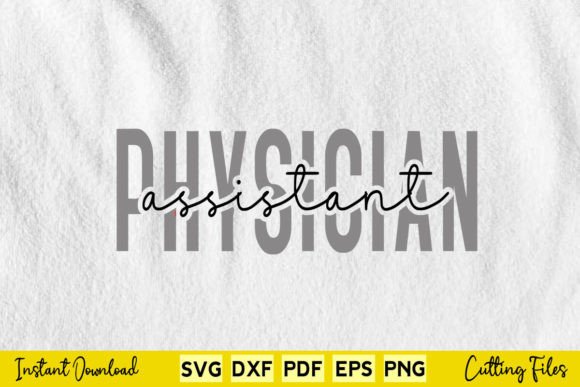
When I first pulled up the Physician Assistant Svg Png Cutting File, the immediate takeaway was its clean, professional silhouette. In the world of Crafts and Graphics, medical designs often suffer from being too cluttered or overly cartoonish, which can undermine the professionalism required for healthcare workers. This design strikes a balance. It has a modern mood that feels respectful yet approachable. The layout appears optimized for clarity, which is crucial when you are converting vector lines into satin stitch or fill stitch paths.
The visual personality suggests versatility. It doesn't scream "novelty item" so much as it whispers "professional pride." For an Etsy seller or a boutique owner, this distinction is vital. You want a design that a PA would wear to a hospital shift without feeling like they are in costume. The simplicity of the shape means it likely avoids excessive stitch density, reducing the risk of fabric puckering—a common nightmare in machine embroidery design.
Real-World Application: The Custom Tote Scenario
To truly test the viability of this asset, I envisioned a specific project: a custom embroidered tote bag for a graduation gift. Physician Assistants often carry heavy loads, and a sturdy canvas tote is a practical gift. Using the Physician Assistant Svg Png Cutting File here makes sense because the bold lines of the SVG translate well to the coarse weave of canvas.
If I were stitching this onto a tote bag design, the scalability of the SVG format is a major plus. Unlike a fixed-size embroidery file, the SVG allows me to resize the graphic perfectly to fit a 4x4 hoop or a larger 5x7 area before digitizing it for the machine. This flexibility ensures that the proportions remain intact whether I am making a small embroidered patch for a scrub cap or a large statement piece for a sweatshirt embroidery project.
In this scenario, the customer reaction would likely be positive due to the personalization aspect. A personalized gift that acknowledges their specific role in the medical field carries more weight than a generic "Doctor" mug. The design serves as a badge of honor, enhancing the perceived value of the finished product.
Navigating Fabric Challenges and Stitching Clarity
However, no design is perfect for every situation. When working with the Physician Assistant Svg Png Cutting File, one must be mindful of the substrate. While it shines on stable fabrics like cotton twill or denim, caution is needed on stretchy materials. If you attempt this on a thin, stretchy t-shirt without proper stabilization, the running stitch outlines could distort.
For baby embroidery projects, such as a onesie for a PA's child, the scale becomes critical. If the design includes fine details or tiny lettering (which often accompanies these titles), those elements might get lost or become scratchy against sensitive skin. In such cases, I would recommend simplifying the digitization or opting for an applique design approach where the SVG acts as a cut guide rather than a full stitch-out. This reduces bulk and improves comfort.
Dark fabrics present another consideration. Since this is a Graphics product intended for cutting and printing as well, the contrast is key. When embroidering on navy or black scrubs, you must ensure your thread colors pop. A white or silver metallic thread could elevate the design, but you need to verify that the original SVG doesn't rely on internal shadows that won't translate to thread. Testing a mockup in black and white is a smart move before committing to the hoop.
Technical Considerations for Commercial Use
For those running a small shop product line, consistency is everything. The Physician Assistant Svg Png Cutting File offers a solid foundation for commercial embroidery, but it requires due diligence. Before listing items on your store, you must confirm the licensing terms. Just because you can download it doesn't automatically grant unlimited commercial rights for physical goods versus digital resale. Always read the fine print to protect your craft business.
Furthermore, since this is a digital product, you will not receive a physical item. This means the burden of quality control falls on you. You need to check the node structure of the SVG. Are the curves smooth? Are there unnecessary anchor points that could cause your cutting machine to stutter? A clean vector path ensures crisp edges for heat transfer vinyl or precise stitch boundaries for embroidery.
Enhancing Brand Consistency and Buyer Engagement
Using a high-quality base graphic like this affects your brand perception. If your handmade product looks sloppy because the source file was pixelated or poorly constructed, customers lose trust. Conversely, a sharp, well-executed design reinforces your reputation as a professional creator. Whether you are creating holiday embroidery gifts or year-round custom apparel, the clarity of the design directly impacts buyer engagement.
This specific file fits naturally into a broader collection of medical-themed assets. If you are building a catalog for healthcare workers, having a cohesive look across different items—mugs, pillows, hoodies—creates a recognizable brand identity. The Physician Assistant Svg Png Cutting File serves as a versatile anchor for such a collection.
Final Verdict and Designer Notes
In conclusion, the Physician Assistant Svg Png Cutting File is a promising asset for designers who understand how to adapt digital files for textile work. It is not a "plug-and-play" miracle; it requires thoughtful digitization and material selection.
Here are my practical notes for anyone planning to use this in an embroidery project:
- Test First: Always stitch out on scrap fabric similar to your final product to check for registration issues.
- Stabilizer Matters: Use a cut-away stabilizer for stretchy garments like hoodies to prevent distortion over time.
- Check Density: If digitizing the SVG yourself, keep the stitch density moderate to avoid stiffness, especially on collars or cuffs.
- Verify Licensing: Confirm you are allowed to sell finished physical goods before launching your Etsy listings.
- Contrast Check: Ensure your thread choice provides enough contrast against the fabric color for readability.
- Hoop Size: Confirm the design fits your available hoop sizes, especially if working with smaller items like caps or pockets.
Ultimately, this file is a strong candidate for creating meaningful, professional-grade items. With the right technical execution, it transforms from a simple download into a valued personalized gift or a best-selling small shop product. The potential is there; it just depends on the skill of the maker behind the machine.